1. PG&E launched Dynamic Line Rating (DLR) and Asset Health Monitoring (AHM) technology. 2. The project aims to optimize transmission line capacity and enhance reliability. 3. Successful trials could unlock significant cost savings in California's energy grid. 4. Collaborations include multiple technology partners focusing on renewable energy integration. 5. EPRI will evaluate DLR and AHM technologies over an 18-month demonstration.

FAQ
Why Bullish?
The DLR and AHM project could significantly enhance PG&E's operational efficiency, reminiscent of sectors where technology upgrades led to cost reductions and increased shareholder value, such as utility sectors adopting smart grid technologies.
How important is it?
This development illustrates PG&E's strategic commitment to innovation, crucial for long-term sustainability and profitability, thus making it relevant for investors concerned with growth.
Why Long Term?
The implementation of this technology will take time to yield results, similar to past utility projects that initially required investment but later generated returns as efficiencies improved.
Technology demonstration aims to boost reliability, unlock capacity, and prepare California's grid for extreme weather and additional renewable energy integration
OAKLAND, Calif., Dec. 11, 2025 /PRNewswire/ -- Pacific Gas and Electric Company (PG&E) today announced the successful launch of its Dynamic Line Rating (DLR) and Asset Health Monitoring (AHM) technology demonstration, bringing together advanced sensor technology, real-time analytics, and innovative partner solutions to optimize electric transmission line capacity and proactively monitor asset health.
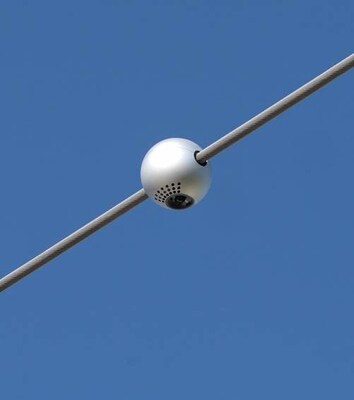
PG&E and project partners recently completed hardware field installations and vendor dashboard setups, achieving trial deployment status across all technologies.
This milestone reflects PG&E's broader strategy to expand and upgrade substation and transmission line capacity, reduce congestion, and ensure reliable service during extreme weather events such as heat waves and high winds.
DLR technology helps utilities determine how much electricity powerlines can safely carry by using real-time weather data like temperature and wind. Instead of relying on fixed limits, it adjusts the rating as conditions change, so utilities can send more power through existing lines without building new ones.
By testing and validating DLR and AHM solutions, PG&E aims to create new pathways for grid modernization, unlock hidden capacity, improve reliability, and integrate more renewable energy, while saving customers money in the process by optimizing its existing assets and avoiding costlier traditional infrastructure upgrades.
"This project is a critical step in modernizing California's grid," said Mike Delaney, Vice President of Utility Partnerships and Innovation, PG&E. "Fundamentally, this project is focused on leveraging new technology to save California's families and businesses money. If this test is successful, we see a path to unlock millions of dollars per year of cost savings through dynamic line rating and asset health monitoring technologies."
PG&E is collaborating with EPRI, which serves as the project's technical advisor, to perform an independent evaluation of the DLR and AHM technologies over an 18-month field demonstration.
Technology Partners
PG&E is working with the following organizations through this project:
- Heimdall Power - Named one of TIME Magazine's Best Inventions of 2025, Heimdall Power's dynamic line rating solution functions like a smartwatch for the power grid. Its advanced sensors, called Neurons, deliver real-time insights into transmission system health and performance by measuring things like powerline temperature, sag, current, and micro-climate weather conditions. PG&E is leveraging the Neurons' real-time data, combined with predictive analytics in Heimdall Power's cloud-based platform, to evaluate the capability for safely increasing line utilization and reducing grid congestion—all without costly infrastructure expansion.
- Prisma Photonics - Prisma Photonics is deploying its PrismaPower beacon system devices at two PG&E substations, one in Humboldt County and one in San Luis Obispo, to monitor 80 miles of transmission lines—all without installing any equipment on the powerlines. PG&E is evaluating the company's DLR and AHM applications: PrismaCapacity, PrismaClimate, and PrismaCircuit. These tools provide continuous monitoring of line capacity, environmental conditions, and circuit health, offering a holistic view of grid performance. Prisma Photonics' technology aims to transform PG&E's existing optical fiber infrastructure into a comprehensive sensing system, enabling wide-area monitoring across challenging terrain without costly sensor installations on towers or conductors. This innovative approach aims to address California's grid challenges from data center demand, extreme weather, and aging infrastructure, delivering actionable insights on powerline ratings and asset health with precise location data that could help utilities maximize efficiency while maintaining safety and reliability.
- Sentrisense - Sentrisense provides real-time monitoring for overhead power lines, combining DLR and AHM in a fully autonomous field device, the SENTRI sensor. The SENTRI attaches directly to electric transmission and distribution powerlines, delivering continuous data on temperature, sag, vibration, and conductor fatigue. By tracking these parameters in real operating conditions, Sentrisense helps utilities detect early signs of degradation, improve grid reliability, and operate lines closer to their true capacity. PG&E is evaluating the technology as a potentially cost-efficient way to extend the lifespan of critical assets and support data-driven maintenance across the grid.
- Smart Wires - Smart Wires' grid enhancing technologies (GETs) help utilities gain more capacity, flexibility and visibility from the transmission system they already have. SmartWires portfolio includes SmartValve, an Advanced Power Flow Control (APFC) solution, and SUMO, a Dynamic Line Rating software platform that uses real-time and forecasted weather data to show how much power each line can safely carry throughout the day. SUMO's insights can improve situational awareness, support decisions around loading and congestion, and reduce the need for major grid expansions. As part of this project, PG&E is evaluating how SUMO works alongside DLR and asset-health monitoring tools to strengthen overall system performance and resilience.
Technical Project Collaborator
- EPRI – Founded in 1972, the Electric Power Research Institute (EPRI) is the world's preeminent independent, non-profit energy research and development organization, with offices around the world. EPRI's trusted experts collaborate with more than 450 companies in 45 countries, driving innovation to ensure the public has clean, safe, reliable, and affordable access to electricity across the globe. Within this demonstration project, EPRI serves as an objective technical advisor, performing an independent evaluation of the DLR and AHM technologies and gathering data and observations over the 18-month field demonstration to inform future best practices to benefit the broader electric industry.
Looking Ahead
PG&E's DLR and AHM technology demonstration project underscores the company's commitment to innovation and collaboration with emerging technology providers.
With vendor dashboards now live and installations completed across multiple substations and transmission corridors, PG&E is testing these tools' ability to reduce congestion, enhance reliability, and prepare the grid for the challenges of extreme weather and the growing demand for renewable energy.
This project is funded through PG&E's electric R&D budget under the public purpose program Electric Program Investment Charge (EPIC).
EPIC enables California investor-owned utilities to demonstrate new technologies and evaluate how they support safety, reliability, and affordability, environmental sustainability and equity objectives for the benefit of all California electric customers.
For more information about PG&E's R&D and innovation efforts, visit www.pge.com/innovation
About PG&E
Pacific Gas and Electric Company, a subsidiary of PG&E Corporation (NYSE:PCG), is a combined natural gas and electric utility serving more than sixteen million people across 70,000 square miles in Northern and Central California. For more information, visit pge.com and pge.com/news

 View original content to download multimedia:https://www.prnewswire.com/news-releases/pge-powers-ahead-on-breakthrough-grid-innovation-with-dynamic-line-rating-asset-health-monitoring-demonstration-302639621.html
SOURCE Pacific Gas and Electric Company